Bubbly-chan remembers July
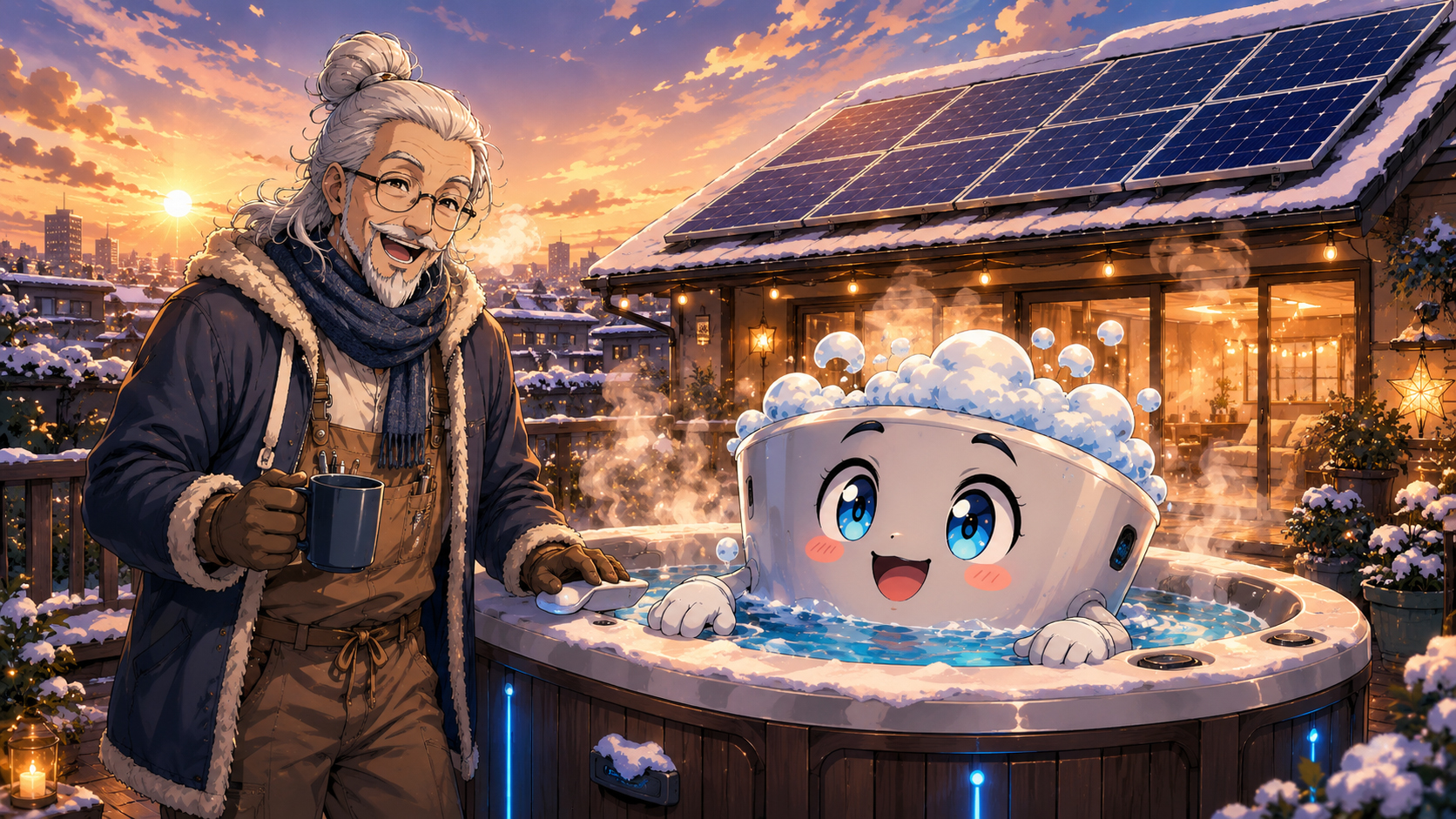
Bubbly-chan poses beside a sunny production chart. The water is warm, the solar panels are cheerful, and everyone feels like a genius.
Bubbly-chan
“Clearly, I am easy to power. July proved it.”
Bubbly-chan brags about how easy she was to heat in July. Then Winter Sensei arrives with cold wind, long nights, lower solar production, and the strictest clipboard in the entire spa universe.
Episode 6 teaches the final big lesson: the system should not be designed for the easiest month. It should be honest about the hard month.
Bubbly-chan poses beside a sunny production chart. The water is warm, the solar panels are cheerful, and everyone feels like a genius.
The wind changes. The sun drops lower. Winter Sensei steps into the yard carrying a clipboard labeled: “December Does Not Care.”
Battery Monk watches the night stretch longer. The heater asks for more energy. The solar panels whisper, “We did our best, but the day was short.”
Solar Sensei, Cover Sensei, Battery Monk, and Winter Sensei write the plan: retain heat, schedule wisely, protect essential loads, and design for real weather.
The episode turns winter into the auditor of every easy summer assumption. If the hot tub plan only works in the sunny month, it is not yet a serious plan.
Cold weather can increase standby heat loss while shorter days and cloudier weather may reduce solar production. That mismatch is the reason winter deserves its own planning page.
Cold air and wind can pull heat from the spa faster. The heater may run more often just to maintain the same water temperature.
Shorter days, low sun angle, clouds, storms, and shading may reduce useful solar production exactly when heating demand rises.
Longer nights mean batteries may carry more of the evening and overnight story. Hot tub heating should not quietly consume essential backup reserves.
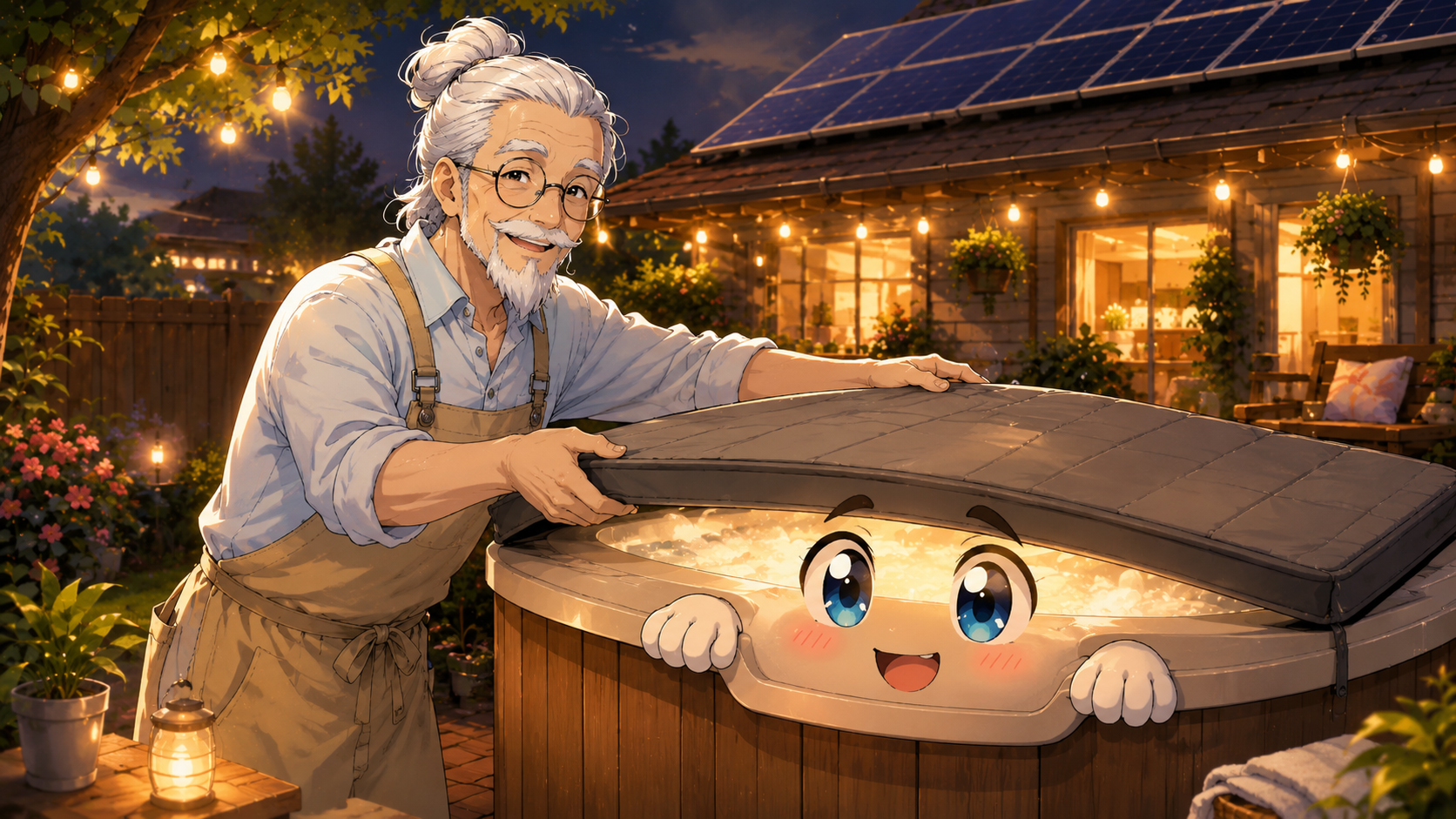
In winter, the cover becomes energy equipment. A cracked, soggy, loose, or poorly fitted cover can turn the hot tub into a heat-loss machine.
Off-grid or backup systems may need generator support, load management, or rules that limit hot tub operation during low production or low battery conditions.
Solar hot tub planning should look at winter performance before promising comfort. If the plan survives winter reality, the easier months become much less dramatic.
These questions help convert winter anxiety into a practical design conversation.
“I now understand that July applause does not guarantee December performance.”
Winter Sensei nods. “Correct. The honest plan starts with the coldest, darkest, least forgiving week.”
Study winter planningWinter planning is not about ruining spa night. It is about keeping spa night from overrunning the solar-battery plan when conditions are hardest.
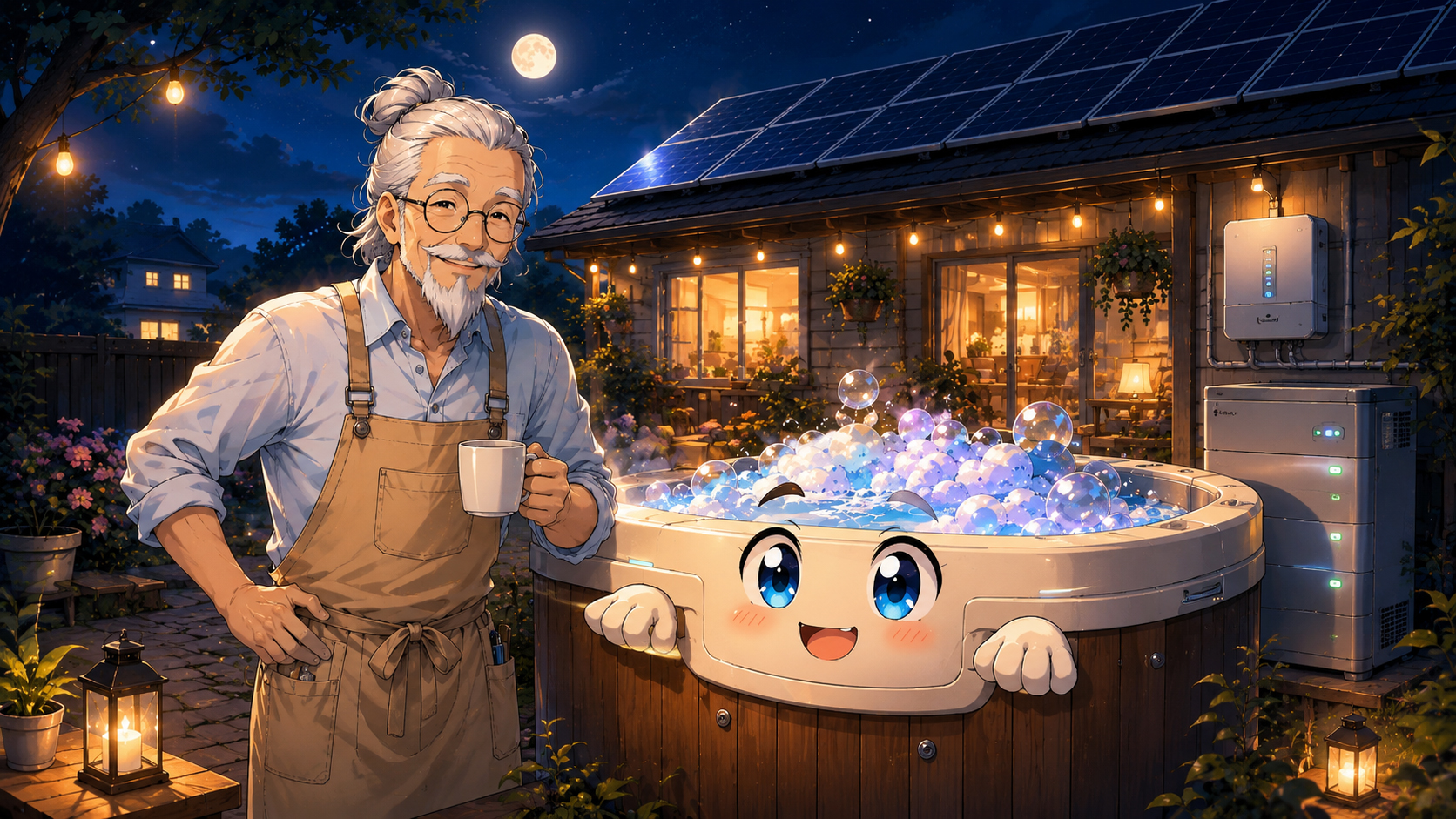
Episode 6 closes the first season with the winter audit. From here, homeowners should return to the serious planning pages.
Solar-Hot-Tub.com is educational and entertaining. It does not provide electrical design, plumbing design, spa installation instructions, battery design, solar design, generator design, utility rate advice, backup-load design, freeze-protection design, inspection approval, controls approval, or permit guidance.
Hot tubs, pools, solar systems, batteries, inverters, backup panels, generators, service panels, subpanels, grounding, bonding, GFCI protection, disconnects, trenching, conduit, wiring, controls, covers, freeze protection, and utility interconnection require qualified licensed professionals, permits, inspections, and manufacturer-approved methods.
Do not use a manga episode as permission to wire, modify, bypass, energize, troubleshoot, winterize, install, add controls, add backup loads, or alter anything near water, batteries, or electrical equipment.