❄
Heat loss rises
Cold air and wind can pull heat from the spa faster. The heater may run longer just to maintain the same water temperature.
Winter hot tub planning matters because cold air increases heat loss, nights are longer, solar production can be lower, and batteries may have less time to recover. The winter month often writes the honest solar story.
A solar hot tub plan that looks easy in spring or summer may struggle in winter. The design should consider lower sun angle, shorter days, cloudier weather, colder air, higher standby loss, and evening use.
Cold air and wind can pull heat from the spa faster. The heater may run longer just to maintain the same water temperature.
Shorter days, low sun angle, clouds, shade, and storms can reduce useful solar production exactly when heating demand rises.
Nighttime heating, lower solar recharge, and household winter loads can pressure the battery system if the hot tub is not controlled.
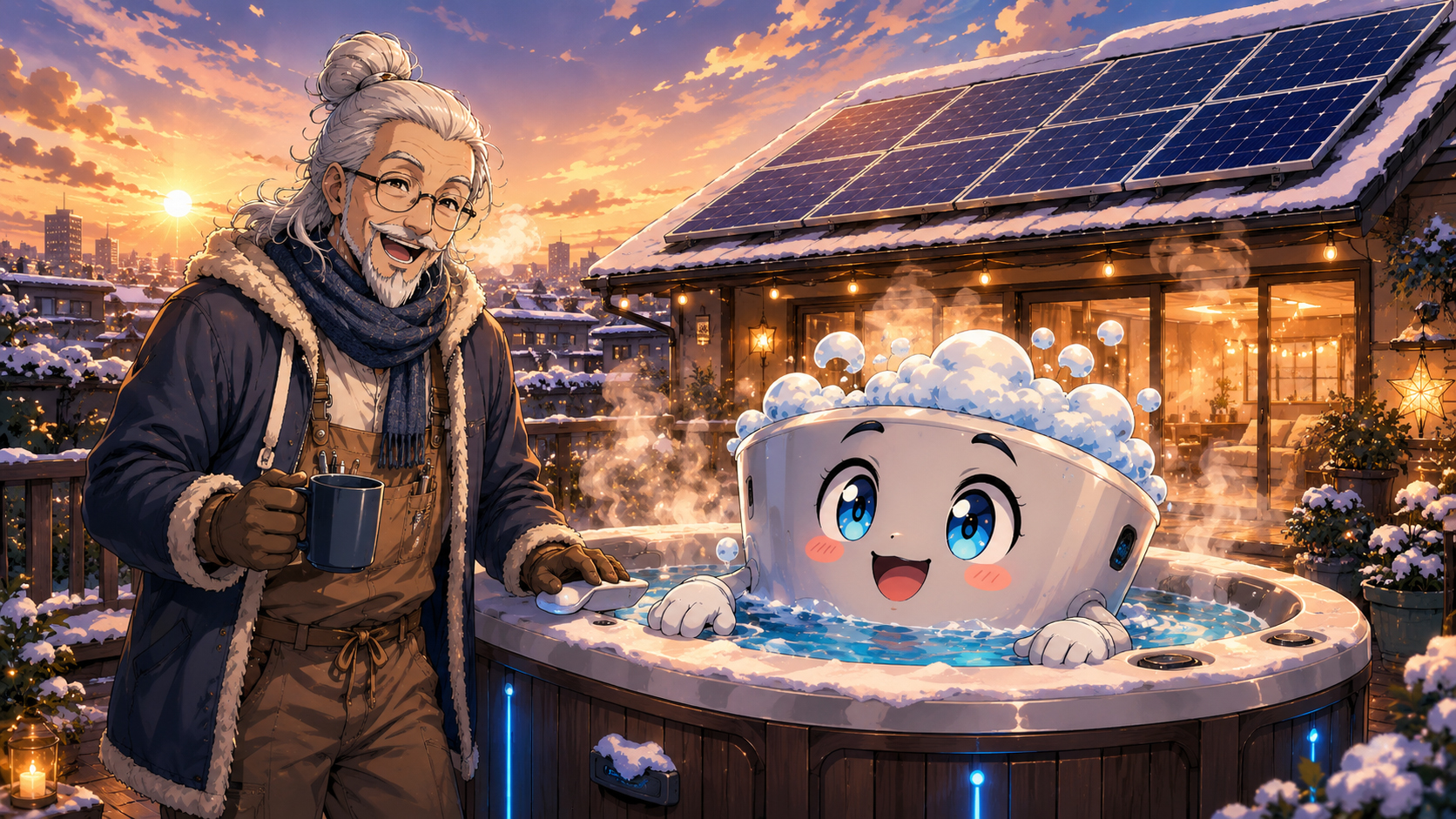
That mismatch is the heart of winter hot tub solar planning. A good winter plan reduces heat loss first, then uses scheduling, solar, batteries, and backup strategy carefully.
These are the practical issues that can make winter hot tub operation more expensive, more difficult, or harder on a battery-backed solar system.
Even when nobody is soaking, the hot tub must keep the water warm. Cold weather increases the amount of heat that must be replaced.
Winter steam may look beautiful, but open water can lose heat quickly. Long uncovered soak sessions can require more recovery afterward.
Winter solar output may be reduced by shorter days, shade, cloudy weather, low sun angles, dirty panels, and storms.
Many people want the hot tub at night. That means the energy demand may arrive after the solar day is mostly finished.
A battery may also be supporting lighting, refrigeration, internet, HVAC, well pumps, or other critical loads. Hot tub heating should not quietly consume the reserve.
In colder climates, freeze protection may be more important than recreational heating. The system must distinguish equipment protection from spa-night comfort.
A strong insulated cover can reduce standby loss, preserve daytime heating, reduce evening recovery, and protect battery capacity. In winter, the cover may be the cheapest part of the energy strategy.
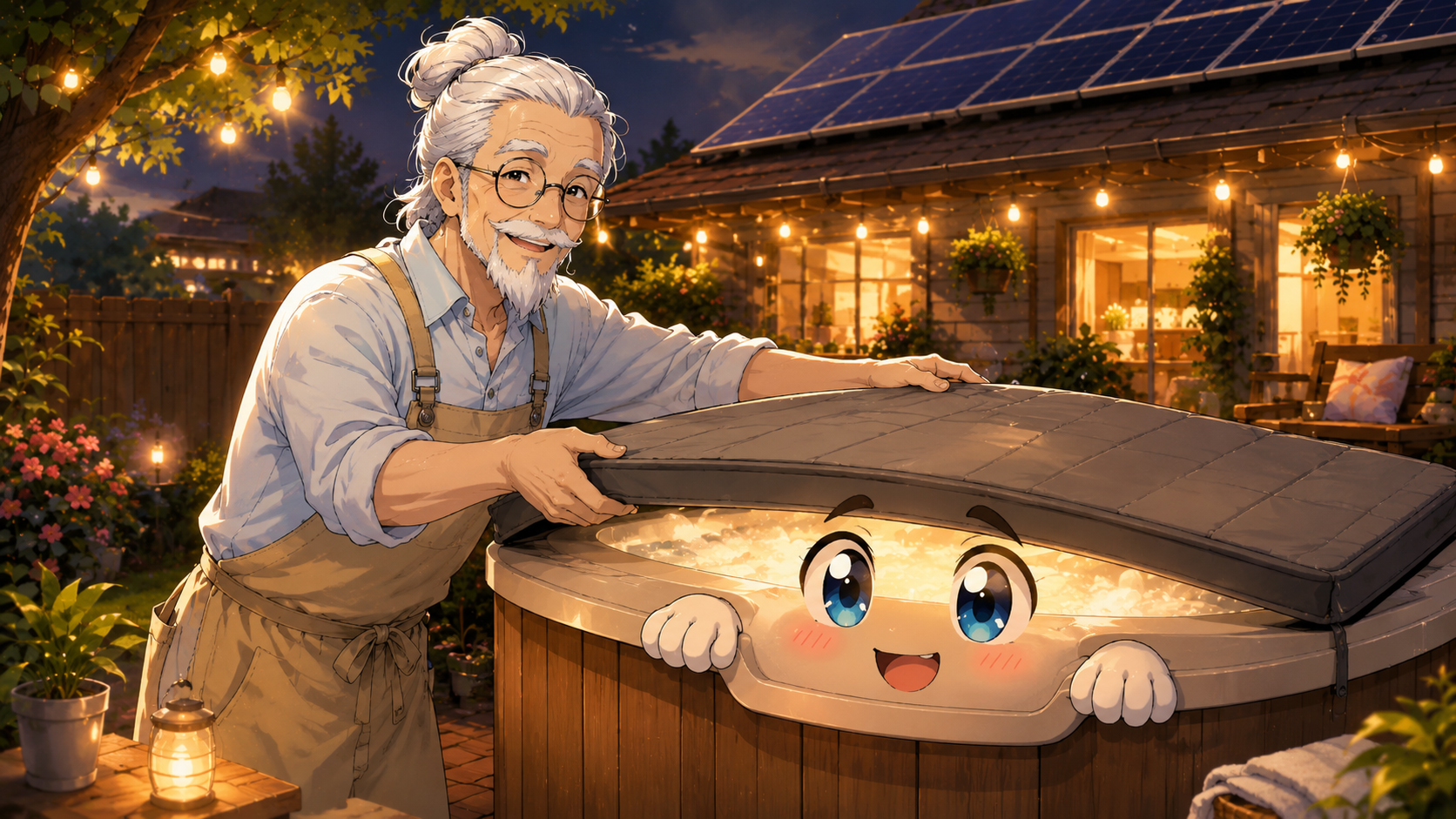
Winter performance should be evaluated before the homeowner assumes the solar and battery system can support every spa expectation.
Bubbly-chan says, “I was easy to heat in July.”
Winter Sensei replies, “July was a brochure. December is the inspection.”
Ask ABC SolarWinter operation should avoid unnecessary recovery during peak-rate windows or low-battery periods. The goal is not to ruin spa night. The goal is to keep spa night from ruining the energy plan.
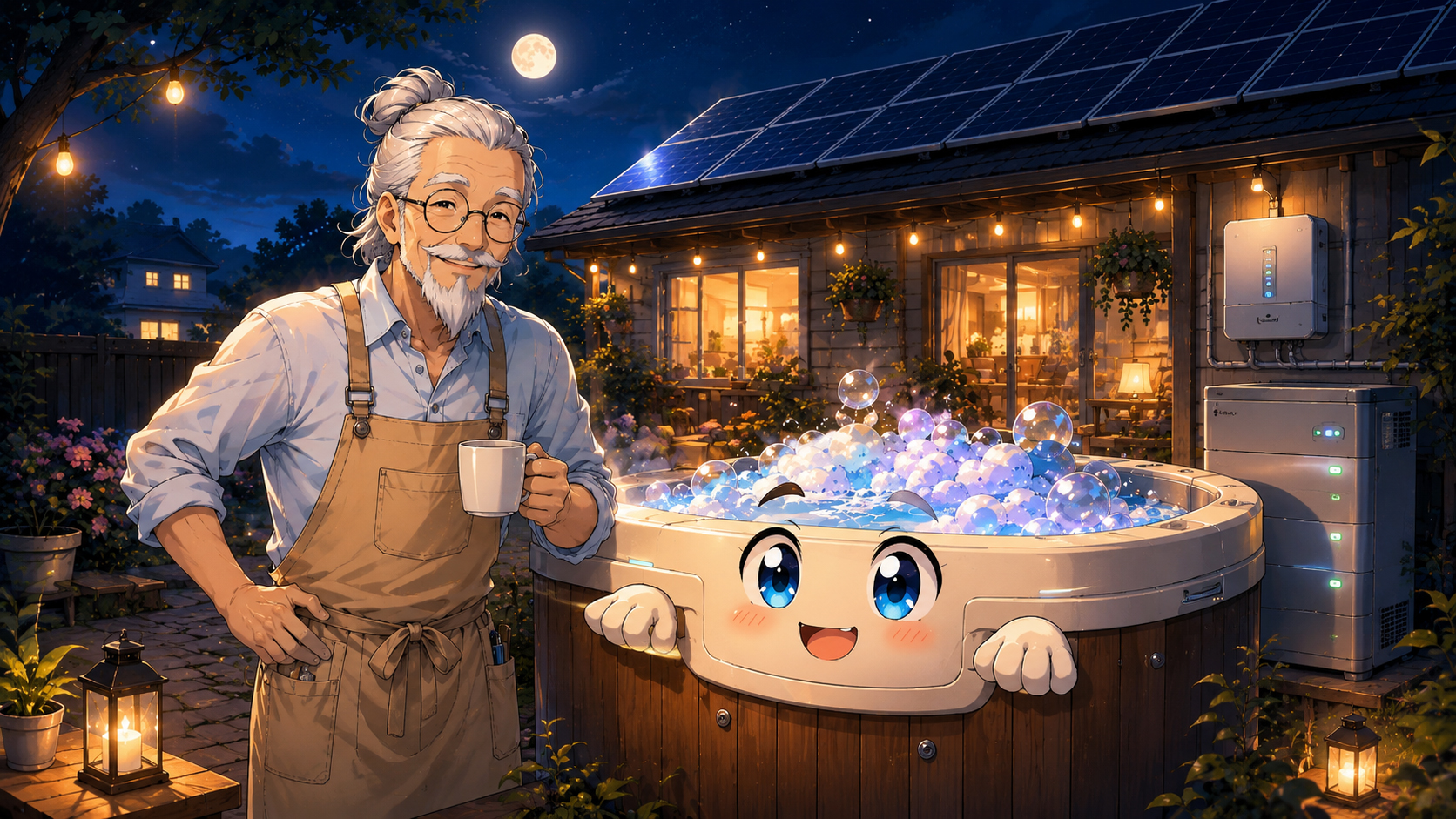
Winter hot tub planning connects directly to solar, batteries, covers, off-grid reality, heat pumps, peak rates, and safety.
Solar-Hot-Tub.com explains concepts. It does not provide electrical design, plumbing design, off-grid system design, spa installation instructions, battery design, generator design, utility rate advice, backup-load design, freeze-protection design, or permit guidance.
Hot tubs, freeze protection, electrical circuits, GFCI protection, bonding, disconnects, solar systems, batteries, inverters, generators, plumbing, trenching, conduit, controls, and utility interconnection require qualified licensed professionals, permits, inspections, and manufacturer-approved installation methods.
Winter conditions can damage equipment and create safety risks. Freeze protection, backup power, and hot tub electrical systems must be designed and installed properly.