🔋
Capacity is limited
A battery stores a finite amount of energy. Hot tub heating can use that stored energy quickly if it is allowed to run without controls.
Batteries can help with peak-rate strategy and backup planning, but hot tub heating can be a serious load. The plan must decide whether the hot tub is a comfort load, a controlled load, or a load that stays off during outages.
In a blackout, not every load deserves the same priority. Refrigeration, lighting, internet, medical equipment, basic outlets, and pumps may be more important than keeping a hot tub at party temperature.
A battery stores a finite amount of energy. Hot tub heating can use that stored energy quickly if it is allowed to run without controls.
Some loads need a lot of power at once. The inverter and battery system must be designed for both kWh capacity and instantaneous output.
A backup system should decide which loads are essential, which loads are optional, and which loads should be locked out during an outage.
A battery may be useful for shifting energy away from expensive utility windows. That does not automatically mean the hot tub should run freely during a blackout.
Battery design is a ranking exercise. The hot tub may be included, controlled, limited, or excluded depending on the homeowner’s real goals.
Refrigerators, freezers, internet, lighting, garage access, medical equipment, selected outlets, security, and other important circuits usually come before luxury heating loads.
HVAC, pool pumps, well pumps, sump pumps, or hot tub equipment may be included only when the battery and inverter can support them and controls prevent runaway usage.
Heating water can be energy intensive. During an outage, the better strategy may be to preserve heat with the cover and prevent unnecessary heater operation.
Circulation and freeze-protection concerns may matter more than recreational soaking. The design must distinguish between keeping equipment safe and keeping the water spa-night hot.
Load management, smart panels, relays, schedules, or manual operating rules may be needed so the hot tub does not drain the battery during critical periods.
The best battery strategy may begin with keeping heat inside the water. If the cover reduces standby loss, the system has less work to do later.

Before any battery promise, the load list needs to be honest.
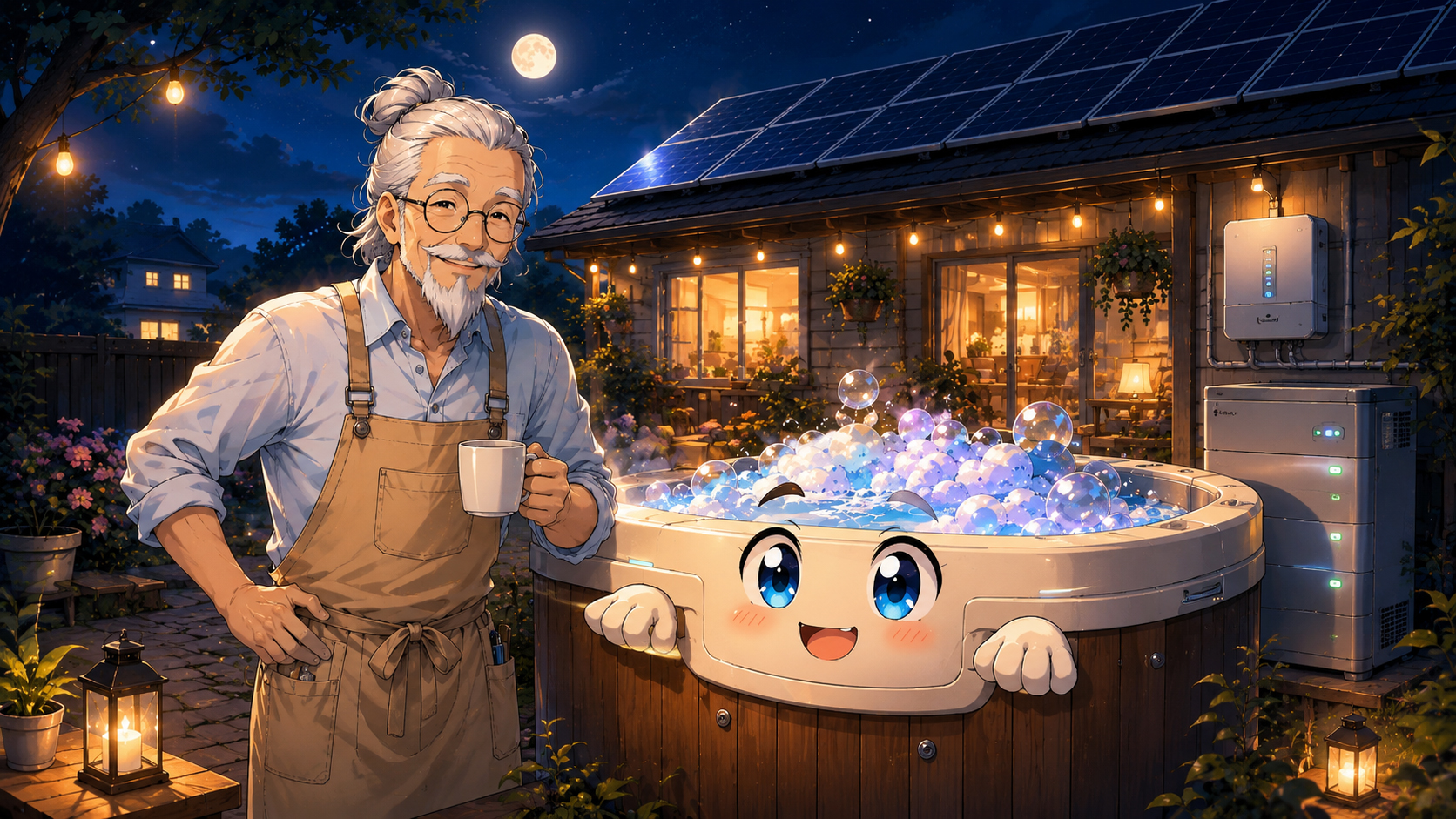
Bubbly-chan says, “Surely the battery exists so I can stay warm forever.”
Solar Sensei answers, “The battery exists to serve the plan. First we decide what matters most, then we decide what the battery is allowed to do.”
Ask ABC SolarA battery-backed home can be designed with operating priorities. The hot tub may be disabled, limited, scheduled, or allowed only when solar production and battery state of charge make it reasonable.

Battery planning connects directly to solar production, peak rates, covers, winter performance, and safety.
Solar-Hot-Tub.com explains concepts. It does not provide electrical design, plumbing design, spa installation instructions, battery design, utility rate advice, backup-load design, or permit guidance.
Batteries, inverters, backup panels, transfer equipment, load management, hot tub circuits, GFCI protection, bonding, disconnects, solar equipment, service panels, and utility interconnection require qualified licensed professionals, permits, inspections, and manufacturer-approved installation methods.
A hot tub should not be casually added to a battery-backed system without proper design. Water, electricity, stored energy, and backup operation require serious engineering judgment.