⚡
Electric shock risk
Electrical systems near water require specialized protection, proper installation, correct equipment, and inspection.
Solar-Hot-Tub.com is educational. It is not installation instruction. Hot tubs, pools, solar, batteries, breakers, bonding, GFCI protection, disconnects, trenching, conduit, and backup systems require qualified licensed professionals, permits, inspections, and manufacturer-approved methods.
Solar-Hot-Tub.com helps homeowners understand what questions to ask. It does not tell anyone how to wire, bond, ground, trench, connect, energize, modify, bypass, repair, or inspect hot tub, pool, battery, solar, or electrical equipment.
Electrical systems near water require specialized protection, proper installation, correct equipment, and inspection.
Hot tubs and pools involve access safety, covers, water quality, equipment clearances, drains, pumps, and manufacturer rules.
Batteries and inverters can deliver serious power. Backup systems require professional design and load management.

Hot tub safety is not one magic device. It is a system of proper equipment, correct wiring, grounding, bonding, GFCI protection, disconnects, manufacturer rules, local code, permits, and inspections.
Homeowners can learn concepts, but field work belongs to qualified licensed professionals using approved equipment and code-compliant methods.
Hot tub electrical circuits must be designed and installed correctly for voltage, amperage, wiring method, breaker type, GFCI protection, disconnect location, bonding, clearances, and manufacturer instructions.
Bonding and grounding are not decorative details. Conductive parts near water require proper treatment so dangerous voltage differences are not created.
GFCI protection is a critical safety layer for hot tubs and pool equipment. Do not bypass, defeat, ignore, or casually replace protective devices.
Solar arrays, inverters, batteries, backup panels, disconnects, rapid shutdown equipment, conductors, overcurrent protection, and utility interconnection require professional design and inspection.
A hot tub should not be casually added to a battery-backed panel. The inverter, battery, conductors, breakers, controls, and backup priorities must be designed as a system.
Sun, rain, corrosion, moisture, rodents, soil, landscaping, flooding, heat, freezing weather, and physical damage can all affect equipment safety and installation methods.
Underground work may involve burial depth, conduit type, conductor ratings, warning tape, utility locating, drainage, grounding, and physical protection requirements.
Manufacturer installation manuals are part of the safety system. Equipment should not be modified, combined, controlled, or repurposed in ways that violate approved instructions.
A solar or battery system may change the energy source, backup behavior, load priorities, and electrical panel layout. It does not remove the need for proper hot tub electrical safety.
These questions help homeowners avoid vague promises and unsafe shortcuts.
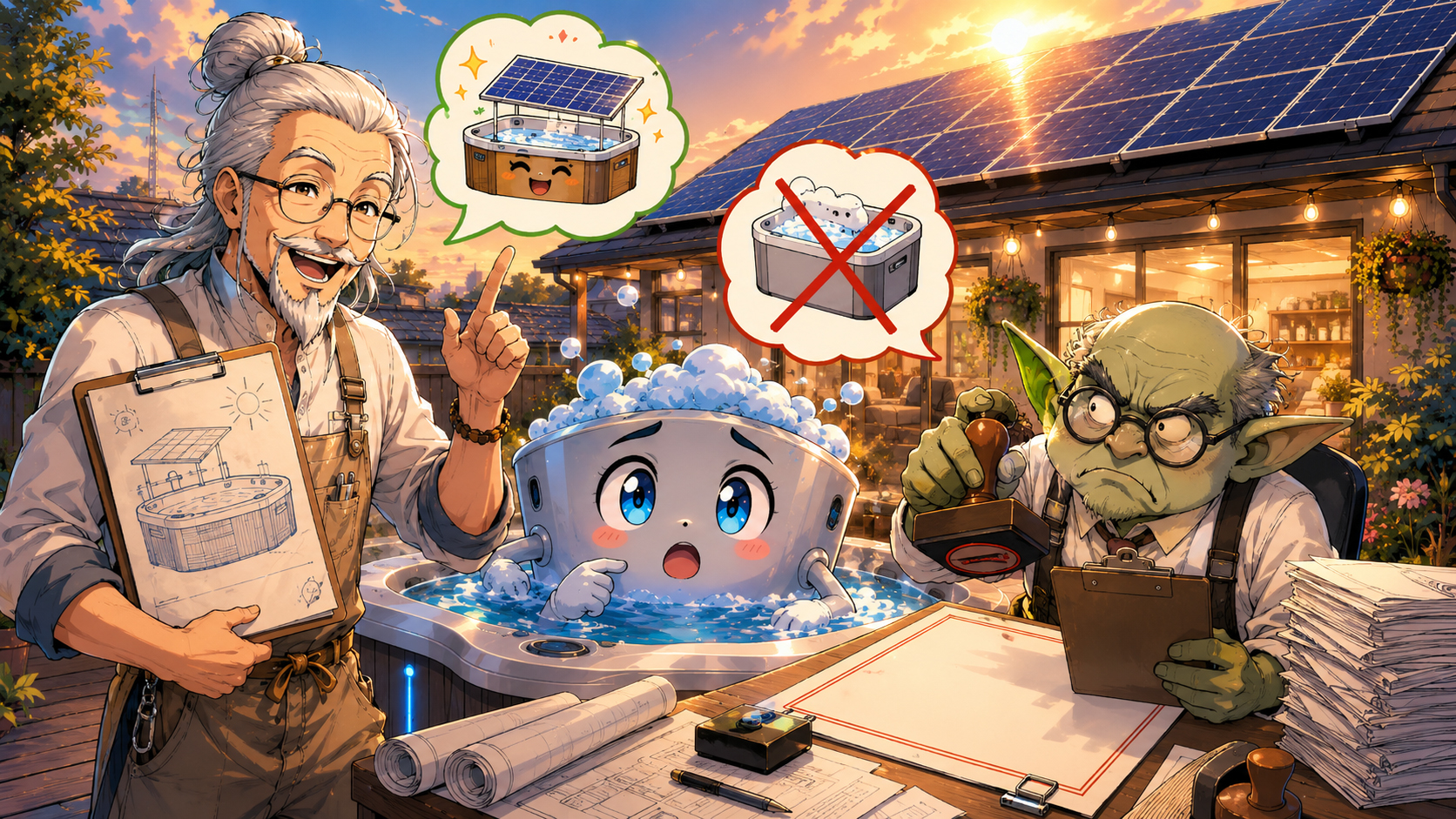
The utility goblin says, “Just tie it in. What could go wrong?”
Safety Sensei slams the permit book on the table: “Water, electricity, and batteries are not a guessing game.”
Read permit warningThis site should never encourage homeowners to bypass safety devices, improvise wiring, add unapproved controls, overload batteries, ignore permits, or treat water-adjacent electrical systems casually.
Solar, batteries, covers, heat pumps, off-grid planning, winter operation, and peak-rate strategy all depend on safe professional installation.
Solar-Hot-Tub.com explains concepts for homeowners. It does not provide electrical design, plumbing design, spa installation instructions, pool installation instructions, battery design, solar design, off-grid design, generator design, utility rate advice, backup-load design, freeze-protection design, or permit guidance.
Hot tubs, pools, solar systems, batteries, inverters, generators, service panels, subpanels, grounding, bonding, GFCI protection, disconnects, trenching, conduit, wiring, controls, and utility interconnection require qualified licensed professionals, permits, inspections, and manufacturer-approved installation methods.
Homeowners should ask better questions, demand proper permits, keep documentation, follow safety rules, and avoid anyone who suggests shortcuts around water and electricity.