☀
Solar offset
Solar can help offset the kWh used by the hot tub over time. But offset is not the same thing as powering the hot tub directly every time it runs.
Solar panels can offset hot tub energy use, but they do not erase timing, heat loss, winter weather, peak rates, or battery limits. The smart path is to understand the load first, then design the solar system around reality.
The hot tub is one load inside the whole house energy picture. A good design looks at the main panel, existing loads, future loads, roof space, solar production, batteries, and utility rate plan.
Solar can help offset the kWh used by the hot tub over time. But offset is not the same thing as powering the hot tub directly every time it runs.
Solar production is strongest in the day. Hot tub use often happens in the evening. Controls, preheating, and batteries may be needed to bridge that gap.
A weak cover or cold windy location can make the solar system chase heat that should have stayed in the water.
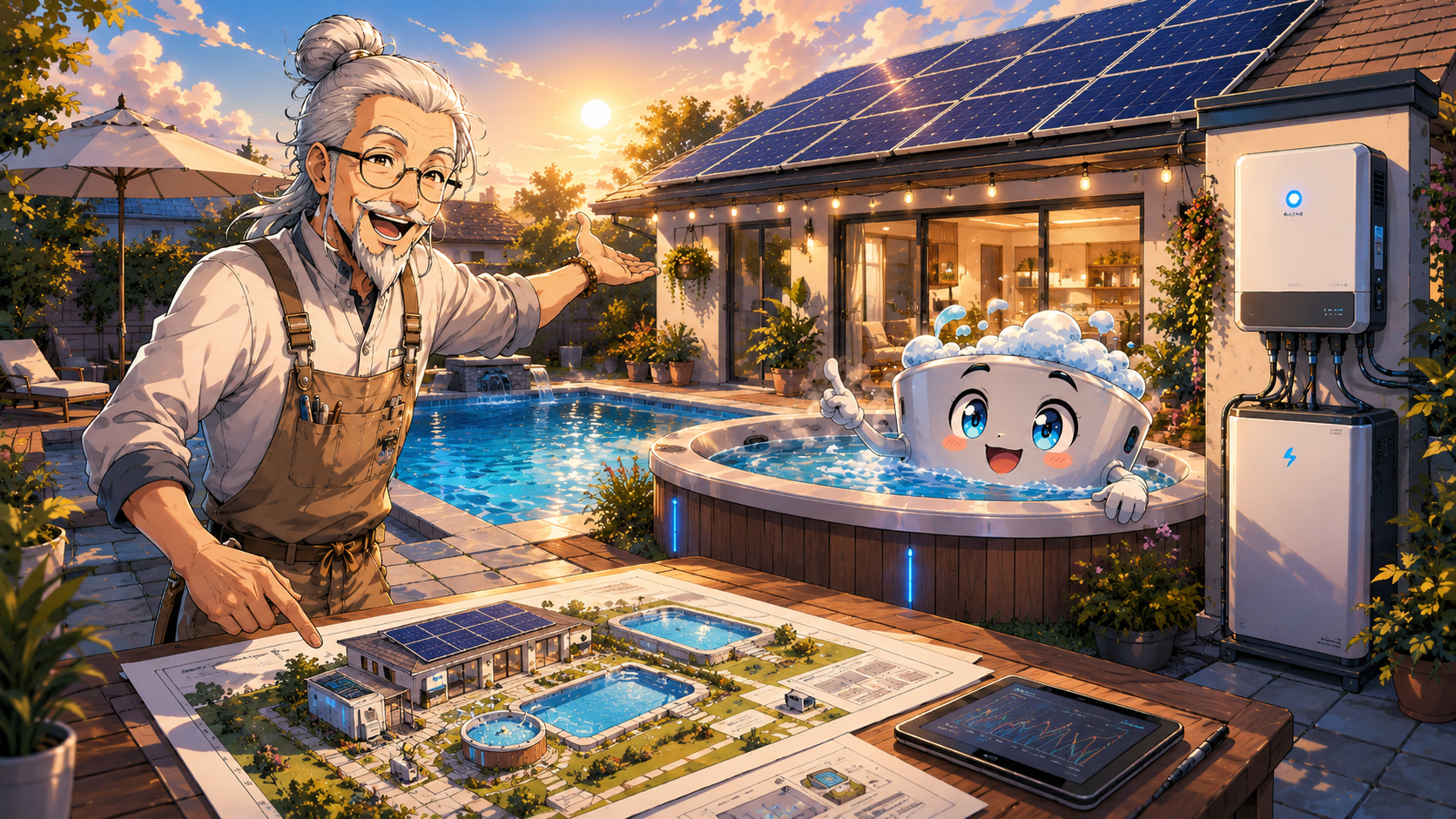
The right question is not “how many panels for a hot tub?” The better question is: how much energy does the whole home use, when does it use it, and how much of that load can be reduced or shifted?
This page should keep the homeowner excited without letting the cartoon bubbles turn into cartoon promises.
A properly designed solar system can produce electricity that offsets some or all of the home’s annual energy usage, including hot tub energy use, depending on roof space, system size, rate plan, and site conditions.
Solar production may happen at noon while hot tub heating or soaking happens at night. Without batteries or scheduling, the grid may still be part of the timing solution.
If the cover is weak, insulation is poor, or wind exposure is severe, the hot tub can waste energy that a better cover or better operating schedule might have saved.
Solar panels, batteries, electrical panels, hot tub circuits, bonding, GFCI protection, disconnects, and utility interconnection all require qualified design, permits, inspections, and licensed professionals.
The hot tub becomes a better solar load when its heating schedule, standby temperature, filtration cycle, and peak-rate behavior are understood and managed.
Evening hot tub use is emotionally perfect and electrically inconvenient. If the utility has expensive evening rates, the plan may need to shift heating earlier, rely on retained heat, use battery support, or accept grid use as part of the design.

The hot tub is one part of the design conversation. The whole property matters.
“I want to be hot, affordable, safe, permit-compliant, battery-friendly, and ready by sunset.”
That is a lot for one spa princess. The correct answer is a real load plan, not a magic number of panels.
Ask ABC SolarSolar panels make energy. Covers save energy. For hot tubs, both matter. A strong cover can reduce the amount of heat the system must replace later, especially overnight and in winter.

Solar works best when the homeowner understands batteries, rates, covers, winter performance, and safety.
Solar-Hot-Tub.com explains concepts. It does not provide electrical design, plumbing design, spa installation instructions, battery design, utility rate advice, or permit guidance.
Solar systems, batteries, hot tub circuits, GFCI protection, bonding, disconnects, trenching, conduit, service panels, and utility interconnection require qualified licensed professionals, permits, inspections, and manufacturer-approved installation methods.
Water and electricity are a serious safety combination. Homeowner education helps with better questions, but the actual design and installation must be done properly.