☀
Solar is seasonal
Solar production changes by season, weather, roof angle, shading, and day length. The winter month may define the real design challenge.
An off-grid hot tub is possible only when the energy math is respected. Solar production, battery storage, winter heat loss, generator backup, cover quality, and load priorities must all be designed around real use.
Off-grid design starts with the essential loads: refrigeration, lights, pumps, communications, heating or cooling, medical needs, and basic home function. The hot tub enters the plan only after those priorities are protected.
Solar production changes by season, weather, roof angle, shading, and day length. The winter month may define the real design challenge.
A battery can be large and still limited. Hot tub heating can drain stored energy that the home may need for essentials.
Heating water takes serious energy. Off-grid plans should reduce heat loss first, then decide how much comfort is realistic.

When there is no grid to lean on, the system must be designed for real energy demand, bad weather, winter production, battery limits, and backup fuel. A hot tub can be included only if the whole system can support it safely.
The rules are not anti-comfort. They are what allow comfort to exist without destroying the energy plan.
Refrigeration, lighting, communications, water pumps, heating or cooling, medical equipment, and safety systems usually come before recreational hot tub heating.
The hot tub cover is not optional decoration. It is part of the off-grid energy system. A weak or open cover turns stored energy into steam.
The system should be evaluated for winter solar production, colder air, higher heat loss, longer nights, and repeated cloudy days.
The hot tub may need to be locked out, limited, scheduled, or allowed only above a certain battery state of charge.
A generator may still be necessary for extended bad weather or emergency recovery. Off-grid purity should not replace reliable design.
Off-grid does not mean code-free. Hot tubs, water, electricity, solar, batteries, generators, grounding, bonding, and disconnects require qualified professionals.
A hot tub that feels easy in summer may become a major winter burden. Cold air increases heat loss, nights are longer, solar production may drop, and the battery may have fewer recovery hours.
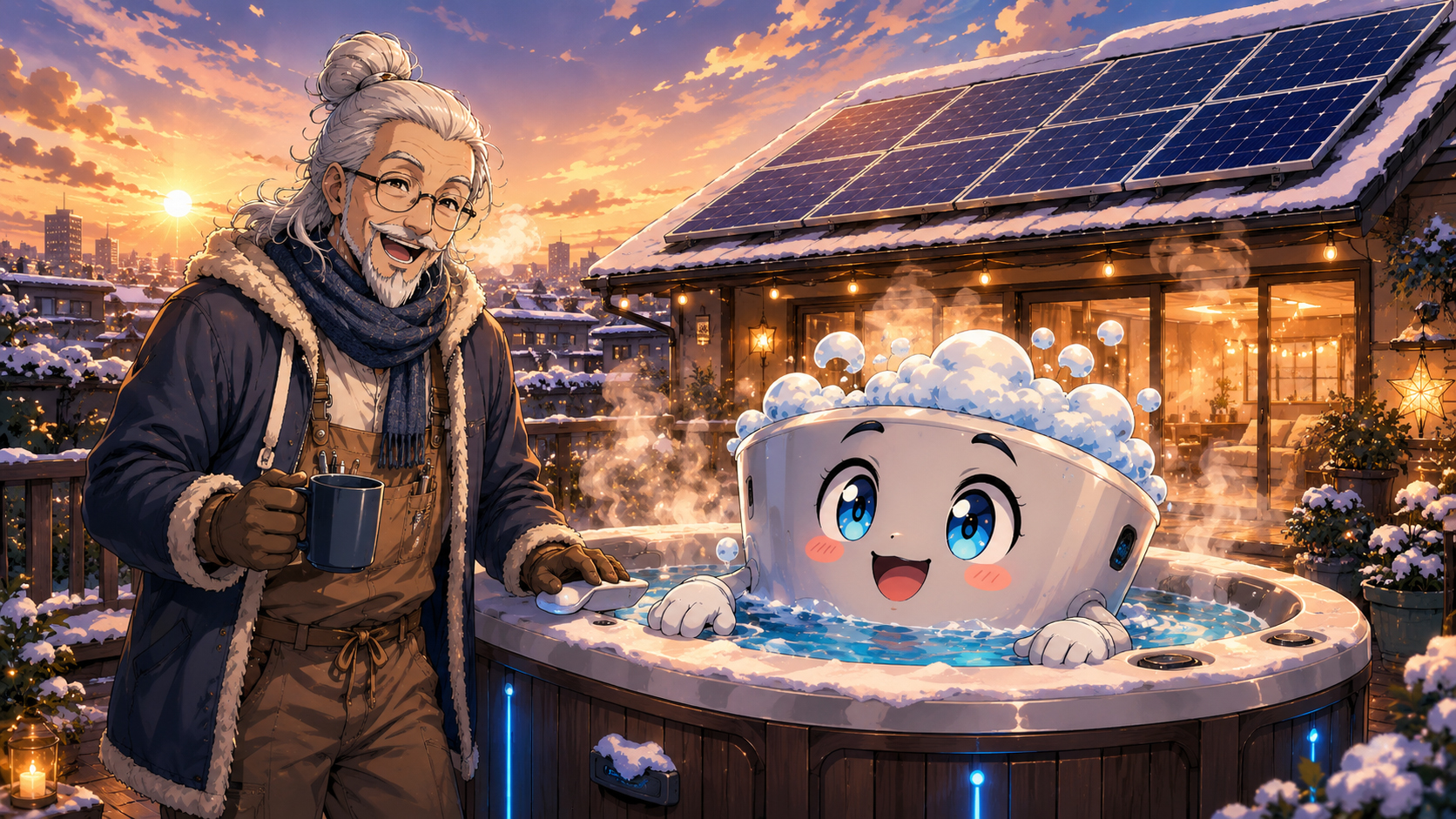
The hot tub can only be considered after the full off-grid energy budget is visible.
Bubbly-chan announces, “I wish to be hot forever using only sunshine.”
Off-Grid Sensei opens the battery monitor and replies: “Forever is not a design value. Show me winter, clouds, cover quality, and the generator plan.”
Ask ABC SolarAn off-grid hot tub should operate by rules. Heating may be allowed only during good solar production, high battery state of charge, or generator operation. During low reserves, the cover becomes the plan.
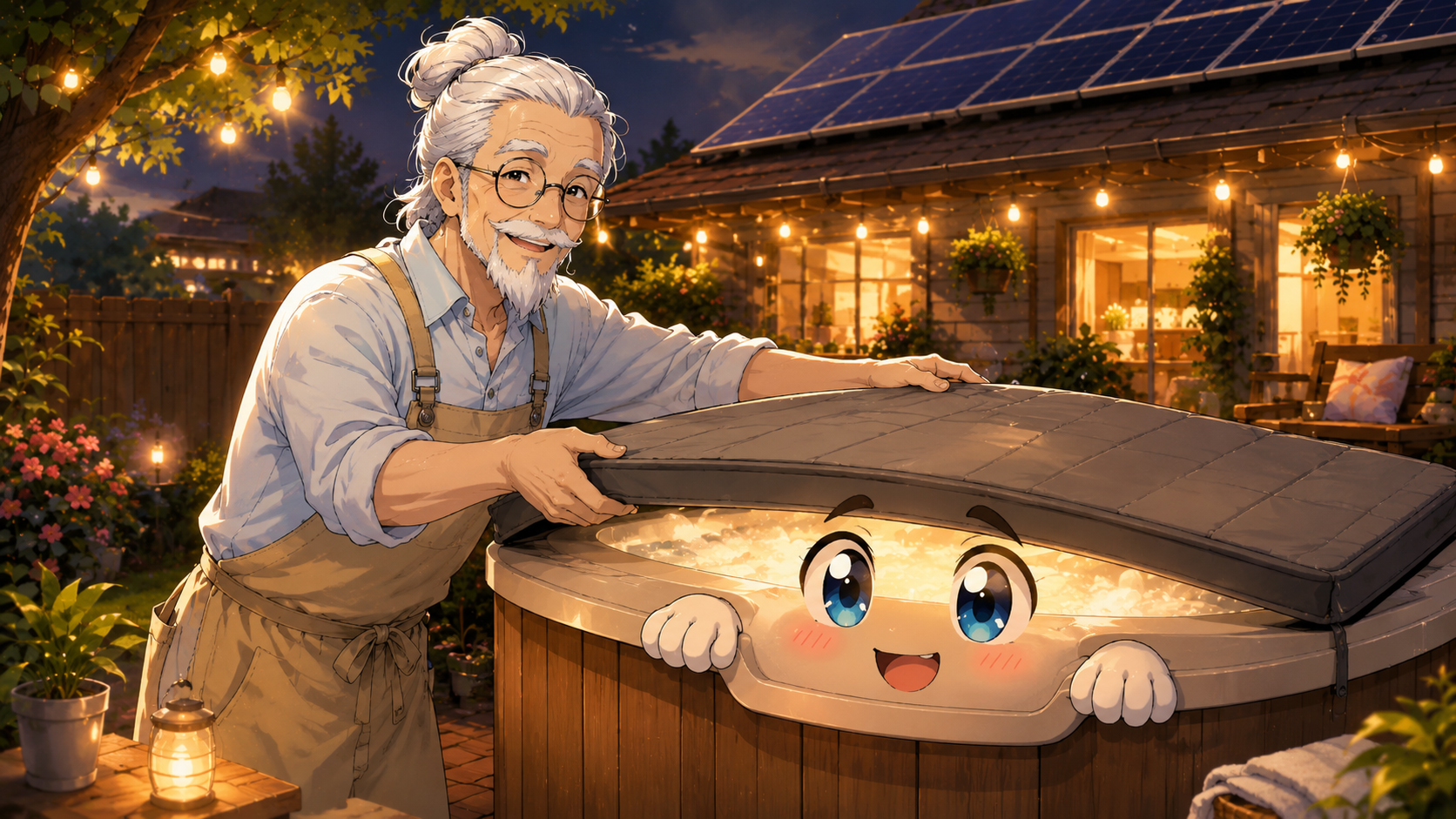
Off-grid hot tub planning connects directly to solar production, batteries, covers, winter performance, heat pumps, and safety.
Solar-Hot-Tub.com explains concepts. It does not provide electrical design, plumbing design, off-grid system design, spa installation instructions, battery design, generator design, utility rate advice, backup-load design, or permit guidance.
Off-grid solar systems, batteries, inverters, generators, grounding, bonding, transfer equipment, hot tub circuits, GFCI protection, disconnects, plumbing, trenching, conduit, and controls require qualified licensed professionals, permits, inspections, and manufacturer-approved installation methods.
Water, electricity, stored battery energy, generators, and isolated power systems require serious design discipline. Off-grid does not mean casual or code-free.