The peaceful soak
Bubbly-chan sparkles under the sunset. Steam rises. The homeowner smiles. The backyard feels like a private resort.
Bubbly-chan
“I am not an appliance. I am lifestyle.”
Bubbly-chan thinks she is only a relaxing spa princess. Then the electric bill arrives wearing sunglasses, carrying a clipboard, and asking why the heater has been partying all month.
This episode opens the Solar-Hot-Tub.com story by turning the electric bill into a character and the hot tub load into a visible problem.
Bubbly-chan sparkles under the sunset. Steam rises. The homeowner smiles. The backyard feels like a private resort.
A thick electric bill lands on the patio table with a dramatic thud. It wears sunglasses, cracks its knuckles, and opens itself.
Solar Sensei points to the hot tub equipment. The heater blushes. The pumps look away. The cover pretends not to hear.
The electric bill writes three words on the chalkboard: watts, hours, and timing. Bubbly-chan gasps as the bubbles become tiny dollar signs.
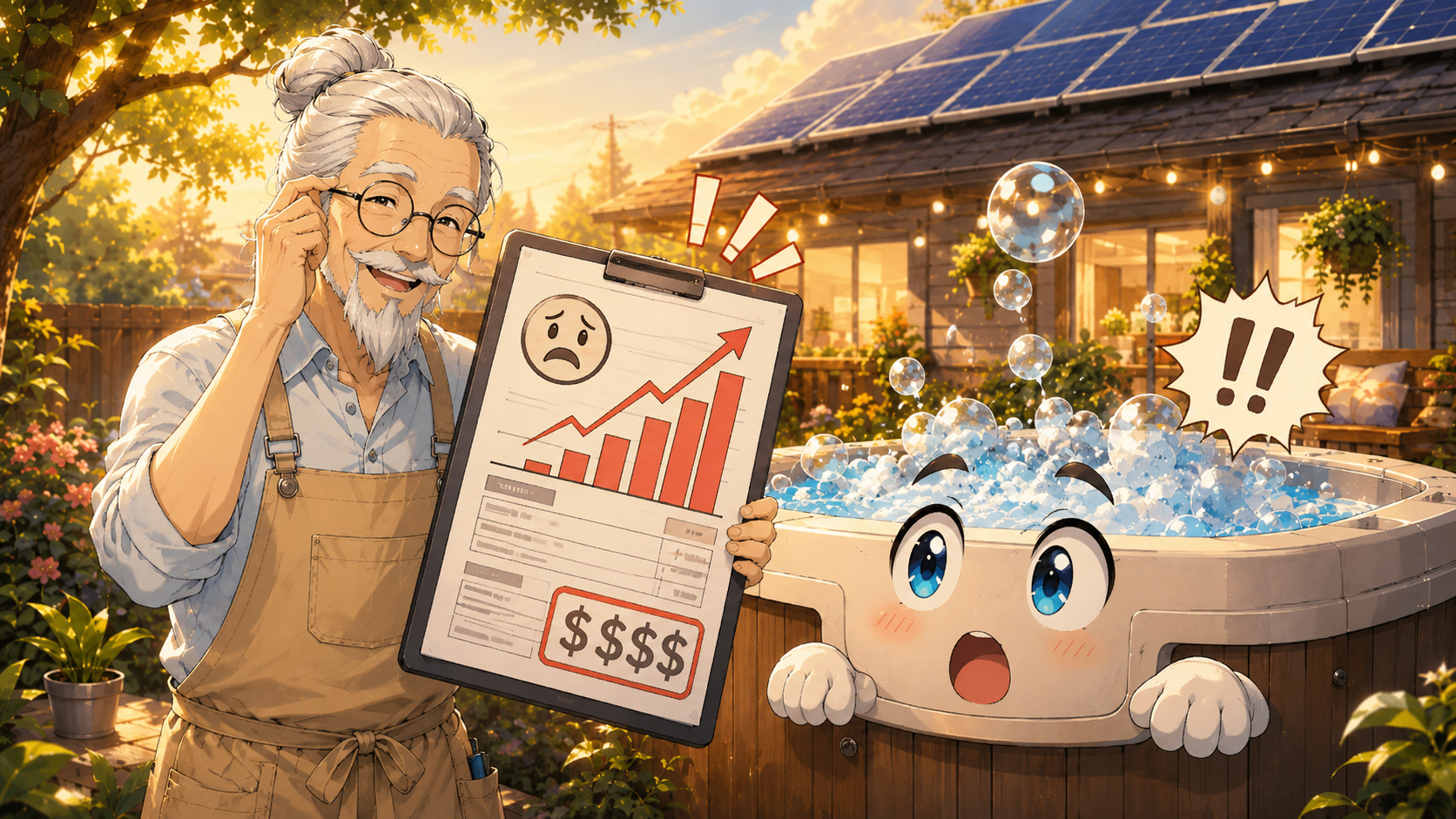
The homeowner did not feel every heater cycle. The hot tub did not announce every standby recovery. But the bill remembered everything.
Episode 1 teaches the first rule of solar hot tub planning: do not design around feelings. Design around loads.
The heater brings water up to temperature and replaces heat lost through air, wind, use, and standby time. It is often the largest part of the hot tub energy story.
Circulation, filtration, jets, and controls may use less power than the heater at one moment, but runtime still adds up over days and weeks.
Even when nobody is soaking, the water keeps losing heat. If the cover is weak or the weather is cold, the heater may work harder just to maintain temperature.
The same hot tub energy can cost more when used during expensive peak-rate windows. The bill cares about when the load runs, not only how much it runs.
Solar can help offset energy use, but the system should be planned around real hot tub behavior, the whole house load, rate timing, batteries, and seasonal performance.
A homeowner does not need to become an engineer, but the basic idea matters. A load’s power draw multiplied by its runtime becomes energy use. That energy use becomes cost.

This is the practical homework before discussing solar, batteries, or hot tub operating changes.
“I am not ashamed of being a load. I simply wish to be understood before everyone blames the solar panels.”
Solar Sensei nods. “Correct. We do not shame the hot tub. We count the load.”
Learn energy basicsIn Episode 2, the Utility Goblin discovers that the hot tub likes to recover heat during expensive hours. That is when peak-rate drama begins.

Episode 1 makes the load visible. The next episodes explain timing, heat loss, covers, batteries, winter, and safety.
Solar-Hot-Tub.com is educational and entertaining. It does not provide electrical design, plumbing design, spa installation instructions, battery design, solar design, utility rate advice, backup-load design, freeze-protection design, inspection approval, or permit guidance.
Hot tubs, pools, solar systems, batteries, inverters, generators, service panels, subpanels, grounding, bonding, GFCI protection, disconnects, trenching, conduit, wiring, controls, and utility interconnection require qualified licensed professionals, permits, inspections, and manufacturer-approved methods.
Do not use a manga episode as permission to wire, modify, bypass, energize, troubleshoot, or install anything near water or electrical equipment.