📄
Not a permit
No page on this website grants permission to install, modify, wire, plumb, energize, or operate a hot tub, solar system, battery, or backup system.
Solar-Hot-Tub.com is educational and entertaining. It is not a spa permit, electrical permit, plumbing permit, solar permit, battery permit, utility approval, inspection approval, or field installation instruction.
Solar-Hot-Tub.com helps homeowners understand solar hot tub concepts. It does not replace the authority having jurisdiction, a licensed contractor, a licensed electrician, a licensed plumber, an engineer, a manufacturer, a utility, an inspector, or any required permit process.
No page on this website grants permission to install, modify, wire, plumb, energize, or operate a hot tub, solar system, battery, or backup system.
Educational content cannot inspect a site, verify code, size conductors, approve equipment, or accept responsibility for field work.
The concepts here are not electrical drawings, plumbing plans, structural calculations, load calculations, or equipment approvals.
Real projects may require contractor review, utility review, plan check, equipment documentation, site inspection, final approval, and manufacturer-compliant installation. The exact requirements depend on the location, equipment, scope, and local authority.
The more systems involved, the more important it is to keep the scope clean and documented.
A hot tub circuit may involve voltage, amperage, breaker type, GFCI protection, disconnect placement, bonding, conductor sizing, conduit, clearances, equipment ratings, and manufacturer instructions.
A solar system may involve roof attachment, structural review, rapid shutdown, inverter placement, disconnects, grounding, overcurrent protection, utility interconnection, labeling, and inspection.
Batteries may involve location rules, clearances, disconnects, fire-safety requirements, inverter compatibility, backup-load panels, energy management, ventilation, labeling, and emergency access.
Pumps, heaters, controls, automation, bonding, plumbing, equipment pads, clearances, gas lines, condensate, drainage, and manufacturer requirements may all affect the project.
Off-grid systems and generators may involve transfer equipment, grounding, fuel storage, exhaust, noise, fire clearances, battery charging, load management, and special inspection requirements.
Ground mounts, canopies, shade structures, equipment pads, trenching, retaining walls, drainage, and roof-mounted equipment may require additional review beyond electrical work.
Solar, storage, backup, and load changes may affect the utility relationship. Utility requirements are separate from local building permits and must be handled properly.
Even when local approval is obtained, equipment must still be installed according to manufacturer instructions. Improper modifications may create safety problems and warranty issues.
A hot tub is water, electricity, heat, pumps, controls, human bodies, outdoor weather, and sometimes solar or battery power. That is not a casual wiring project.

These questions help keep the project in the professional lane before equipment is purchased or installed.
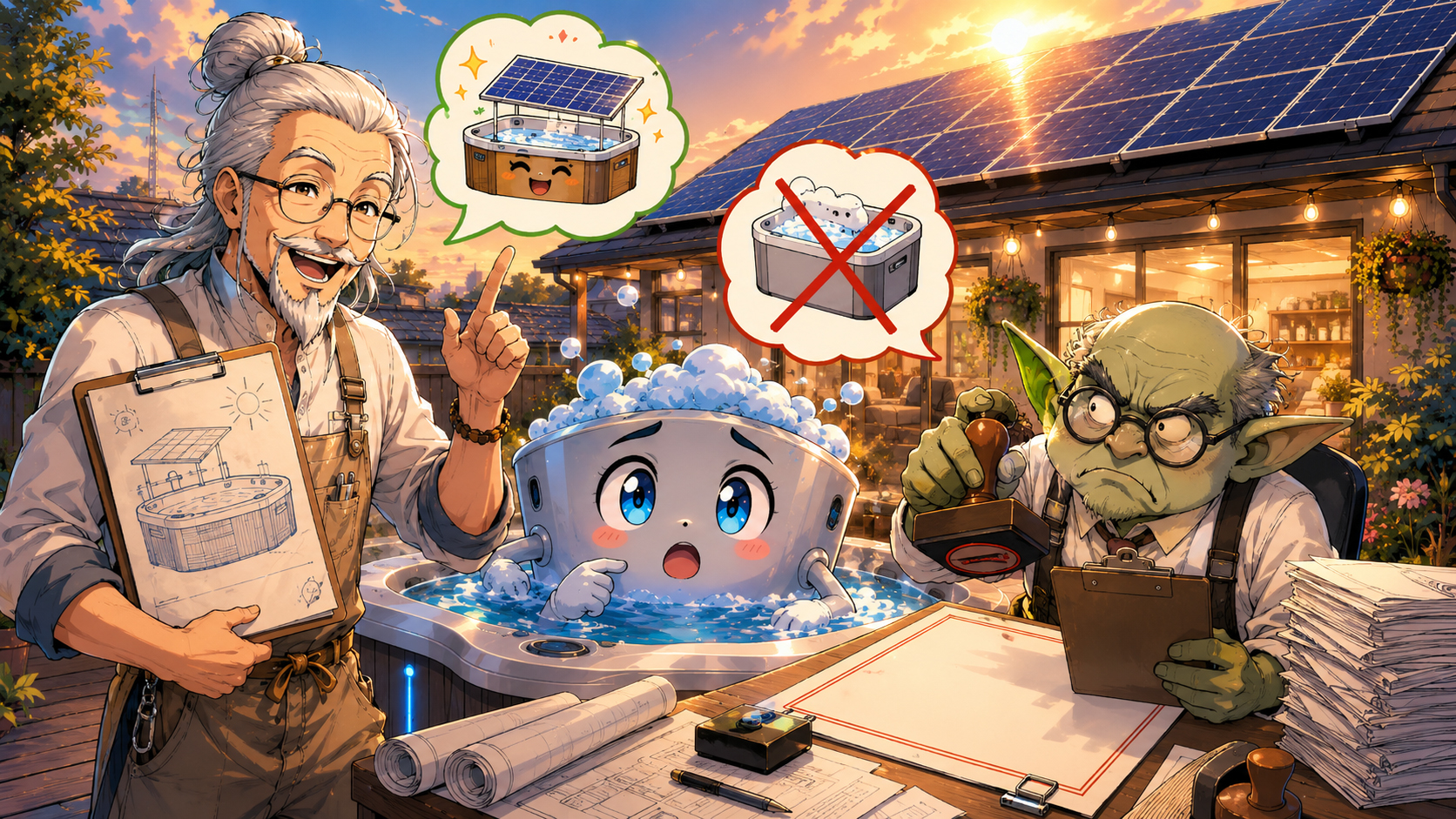
Bubbly-chan says, “But I saw it on a website.”
Permit Goblin bangs the tiny gavel: “Educational bubbles are not approved drawings.”
Solar Sensei nods. “Correct. Concepts are for learning. Permits are for building.”
Read safety pageThe purpose of the site is to help homeowners understand why hot tub loads, solar, batteries, covers, heat pumps, peak rates, and winter planning matter. The purpose is not to replace qualified professional judgment.
Solar, batteries, heat pumps, covers, winter performance, off-grid planning, and peak-rate strategy all still require proper permits, inspections, and professional design when they become real projects.
Solar-Hot-Tub.com is educational and entertaining. It does not provide electrical design, plumbing design, spa installation instructions, pool installation instructions, battery design, solar design, off-grid design, generator design, structural design, utility rate advice, backup-load design, freeze-protection design, warranty approval, code approval, inspection approval, or permit guidance.
Hot tubs, pools, solar systems, batteries, inverters, generators, service panels, subpanels, grounding, bonding, GFCI protection, disconnects, trenching, conduit, wiring, controls, structural attachments, equipment pads, and utility interconnection require qualified licensed professionals, permits, inspections, and manufacturer-approved installation methods.
Use this site to ask better questions, organize the load conversation, understand the safety boundary, and know when a licensed professional must take over.