The beautiful steam
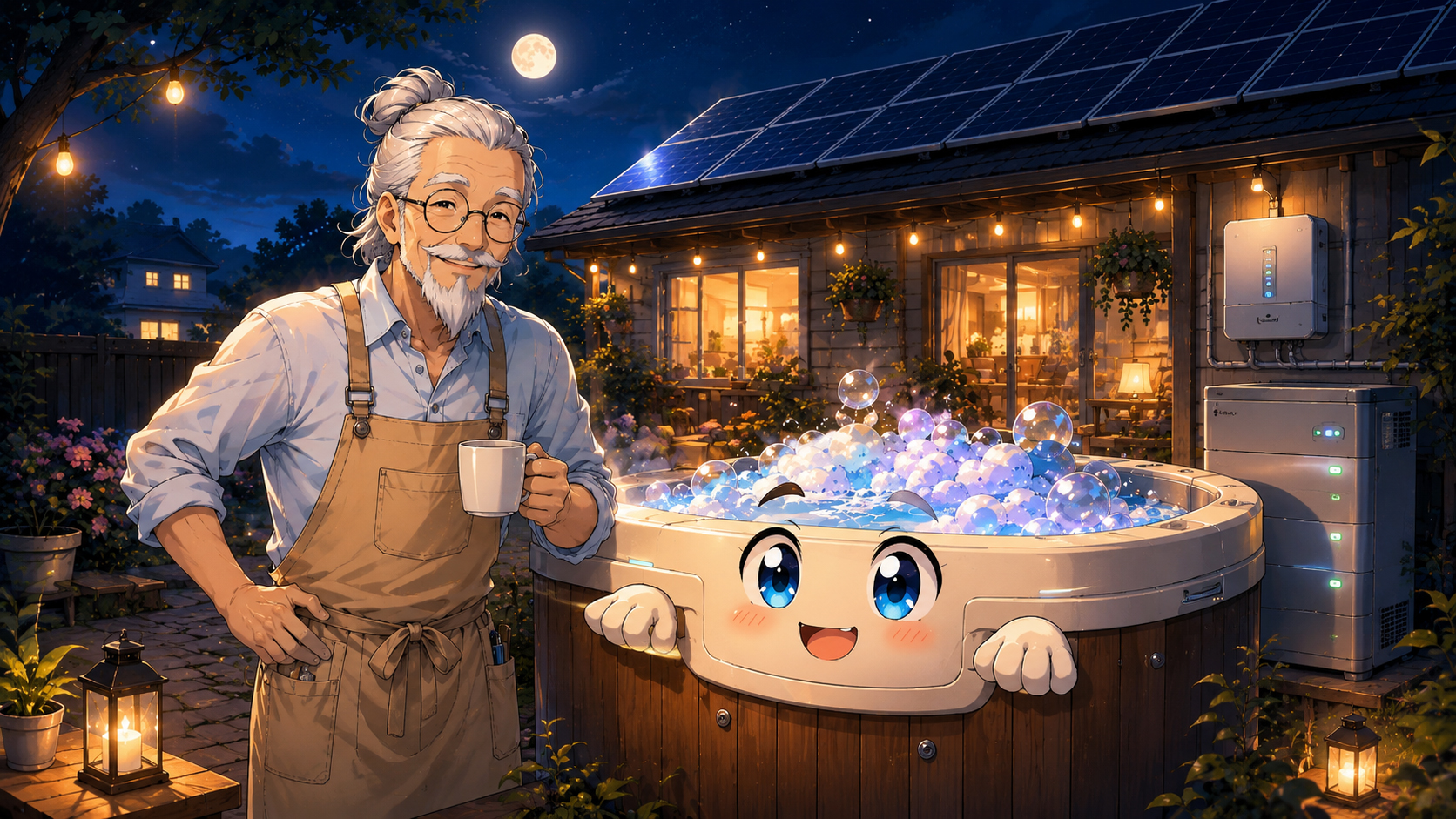
Bubbly-chan poses beneath the moon. Steam rises in soft curls. Everyone agrees it looks luxurious.
Bubbly-chan
“Look at my spa aura. I am basically a lifestyle magazine.”
Bubbly-chan thinks the steam looks beautiful. Solar Sensei points to the rising mist and explains the uncomfortable truth: the hot tub is sending heat into the sky with dramatic lighting.
Episode 3 gives heat loss a personality. The hot tub is not only using energy when the heater turns on. It is losing value whenever heat escapes.
Bubbly-chan poses beneath the moon. Steam rises in soft curls. Everyone agrees it looks luxurious.
Solar Sensei raises one eyebrow and points at the steam. A tiny dollar sign appears in each vapor cloud.
A mischievous wind spirit blows across the open water. The heater groans. Battery Monk clutches the state-of-charge display.
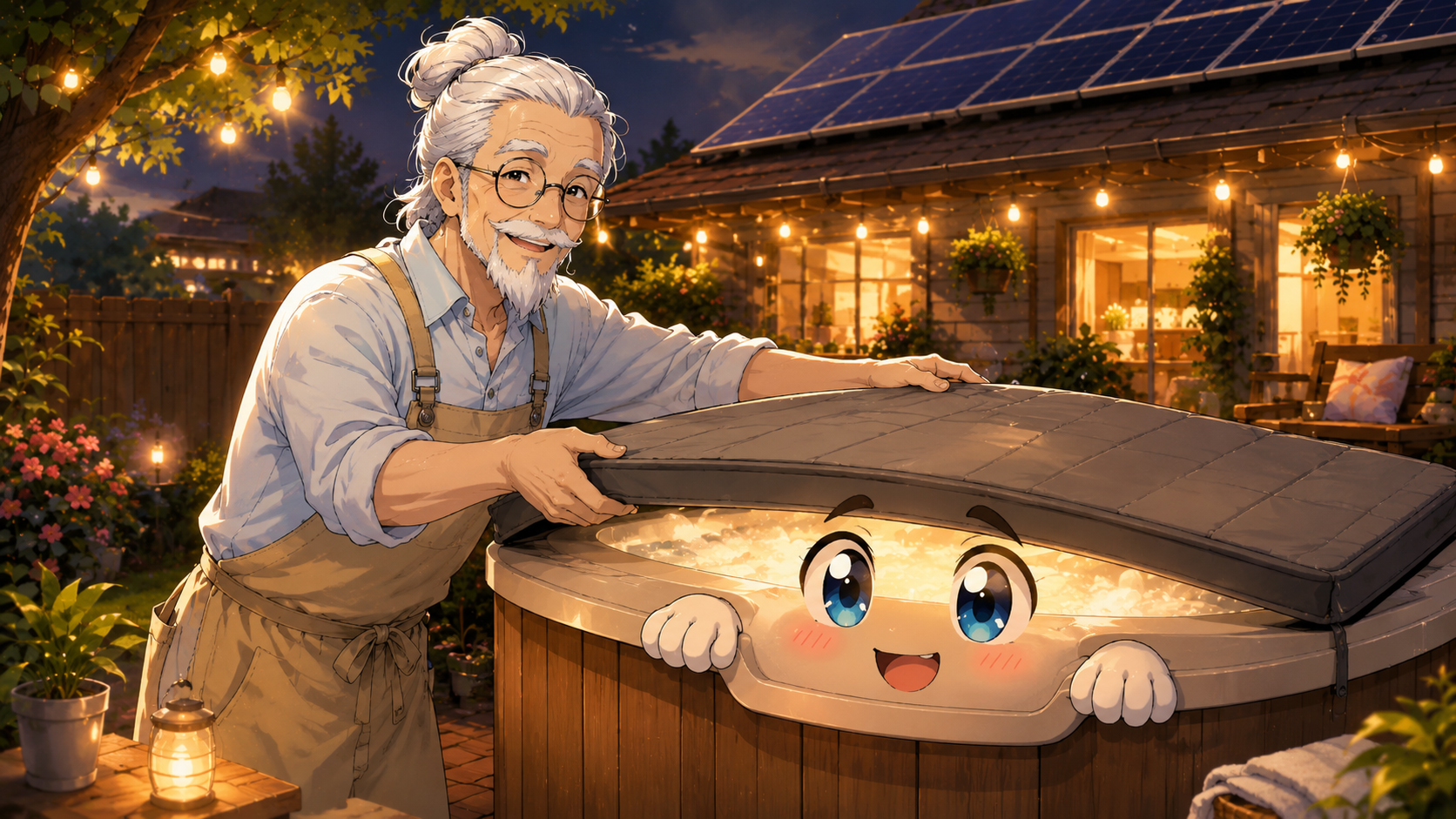
Cover Sensei steps forward, calm and unimpressed. With one firm move, the cover closes and the heater finally stops panicking.
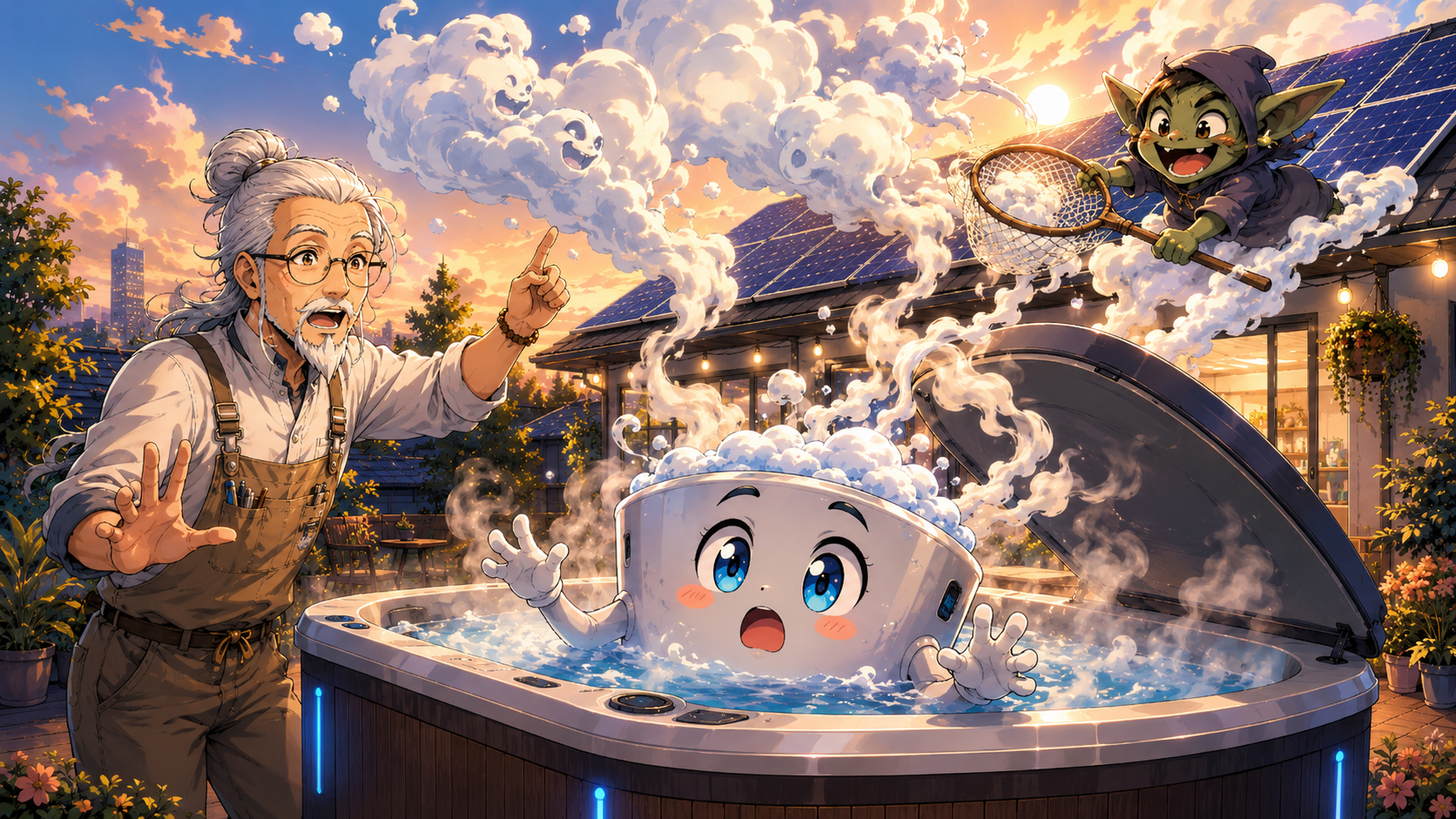
The episode turns steam, wind, and open-cover time into cartoon villains so homeowners remember the real point: heat that escapes must be replaced.
Solar planning gets easier when the hot tub wastes less heat. The cover, wind exposure, weather, and operating habits all affect how hard the heater must work.
Open hot water can lose heat quickly. The longer the cover stays open, the more heat the system may need to replace later.
Wind strips heat from exposed water and surfaces. A hot tub in a windy location may need more energy than the same spa in a sheltered location.
Colder outdoor temperatures increase the difference between water temperature and air temperature. The larger that gap, the harder the system may work.
A cracked, soggy, loose, or poorly fitted cover can let heat escape all night. That can force heater recovery when the homeowner expected quiet standby.
Solar panels can make electricity, but they do not stop heat loss. Reducing wasted heat can lower the load before the solar or battery system has to serve it.
A solar hot tub strategy should not only ask how to produce energy. It should also ask how to stop wasting the heat already paid for.
These items help homeowners find avoidable heat loss before adding more equipment.
“My steam is beautiful, but I understand now that beauty can have a utility cost.”
Solar Sensei answers: “Correct. Enjoy the spa. Then close the cover.”
Study covers & heat lossA heat-loss strategy can make solar, battery, peak-rate, and winter planning more realistic. Less wasted heat means fewer dramatic recovery events.
Episode 3 explains the heat-loss problem. Episode 4 shows how the cover protects the battery.
Solar-Hot-Tub.com is educational and entertaining. It does not provide electrical design, plumbing design, spa installation instructions, battery design, solar design, utility rate advice, backup-load design, freeze-protection design, inspection approval, cover-safety approval, or permit guidance.
Hot tubs, pools, solar systems, batteries, inverters, generators, service panels, subpanels, grounding, bonding, GFCI protection, disconnects, trenching, conduit, wiring, controls, covers, and utility interconnection require qualified licensed professionals, permits, inspections, and manufacturer-approved methods.
Do not use a manga episode as permission to wire, modify, bypass, energize, troubleshoot, install, or alter anything near water or electrical equipment.