🏊
Pool equipment
Pool pumps, booster pumps, automation systems, heaters, salt systems, and lighting can create steady daily energy use.
A pool and hot tub can turn the backyard into one of the most important load zones at the house. Solar planning should include pumps, heaters, covers, controls, peak rates, batteries, panels, and the main electrical service.
The hot tub is not alone. Pool equipment, spa equipment, outdoor lighting, irrigation, EV charging, and entertainment loads can all affect the solar and battery plan.
Pool pumps, booster pumps, automation systems, heaters, salt systems, and lighting can create steady daily energy use.
Hot tub heaters, circulation pumps, jet pumps, controls, and standby heat loss can become expensive when timing is poor.
During outages or peak-rate windows, the battery must know which loads matter most and which loads should wait.
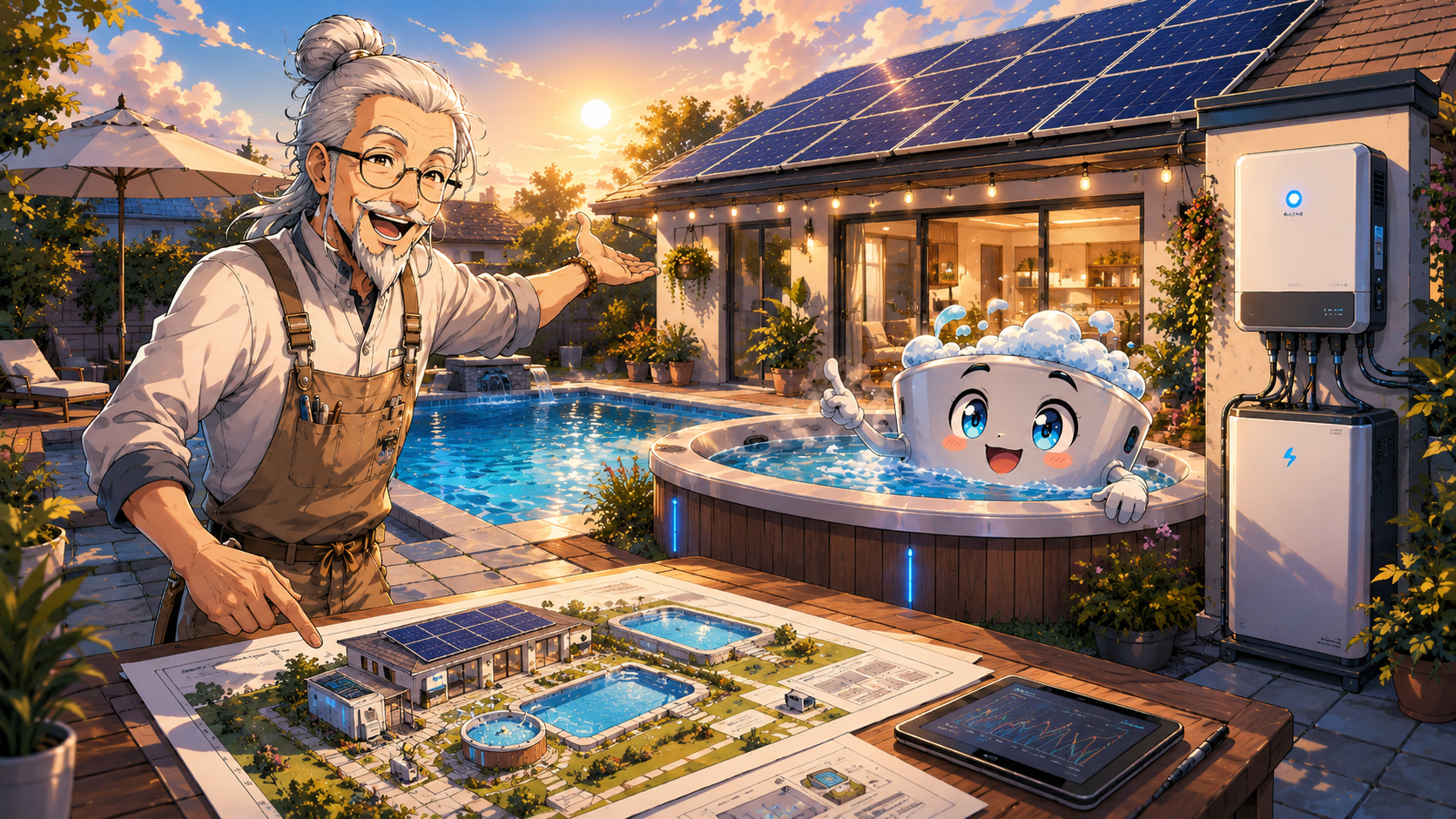
A pool pump may use less power at one moment than a hot tub heater, but it may run much longer. A hot tub heater may run less often, but it can draw serious power. The plan needs both power and time.
A solar contractor needs to know what equipment exists, what may be added later, and when each load normally operates.
Variable-speed pumps can be efficient when programmed correctly, but runtime still matters. The daily schedule should be coordinated with solar production and utility rates.
Heating water can be one of the largest backyard loads. The plan should consider heater size, recovery time, cover quality, and peak-rate windows.
Gas, electric resistance, and heat pump pool heaters each have different energy and electrical implications. Solar planning should not ignore pool heating expectations.
Spa jets, cleaners, water features, and booster pumps may run for shorter periods but can still affect inverter output, breaker sizing, and load management.
Lighting, automation, Wi-Fi controls, fountains, landscape circuits, and outdoor entertainment loads may seem small, but they belong on the full load list.
EV charging, outdoor kitchens, saunas, guest units, heat pumps, and water features should be considered before the solar and battery design is finalized.
Pool pumps and some heating schedules may be shifted toward daytime solar production. Hot tub use often happens later, so covers, controls, and batteries may be needed to bridge the timing gap.
The more complete the load picture, the better the solar and battery conversation.
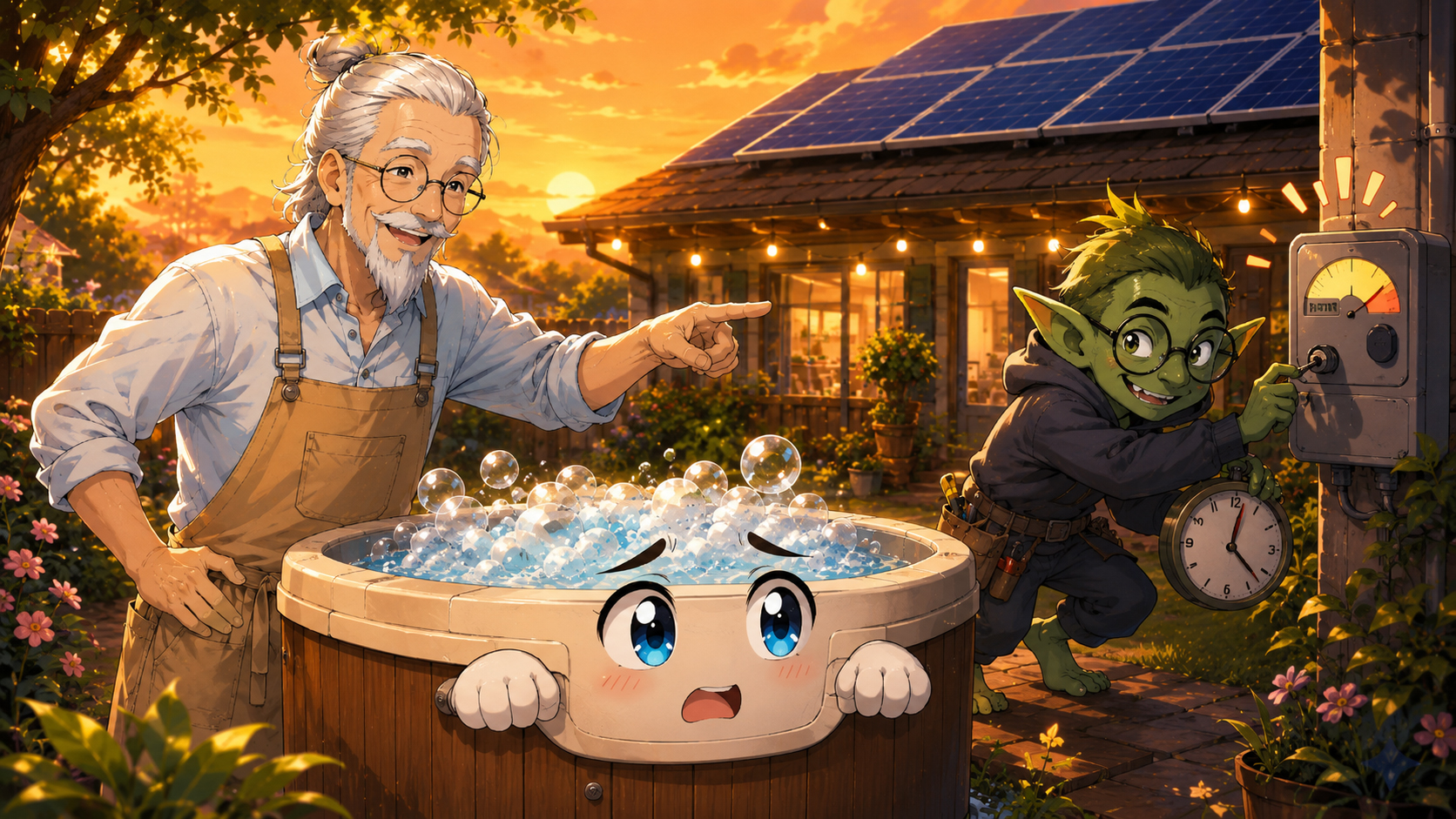
The pool pump wants a long workday. The hot tub wants warm water at sunset. The battery wants rules. The utility goblin wants chaos.
Solar Sensei brings order: list the loads, schedule what can move, protect heat with covers, and design the solar-battery system around reality.
Ask ABC SolarPool pumps may be excellent daytime solar loads. Hot tubs may need preheating, covers, and tighter controls because use often happens after solar production drops.
Pool and hot tub solar planning connects to batteries, covers, heat pumps, peak rates, winter performance, and safety.
Solar-Hot-Tub.com explains concepts. It does not provide electrical design, plumbing design, pool design, spa installation instructions, battery design, utility rate advice, backup-load design, or permit guidance.
Pools, hot tubs, pumps, heaters, electrical circuits, GFCI protection, bonding, disconnects, trenching, conduit, solar systems, batteries, service panels, and utility interconnection require qualified licensed professionals, permits, inspections, and manufacturer-approved installation methods.
Backyard electrical systems near water require serious design discipline. Do not improvise pool, spa, battery, solar, or backup-load circuits.